 (347) 541-4824

A failed service is not yet a cable diagnosis
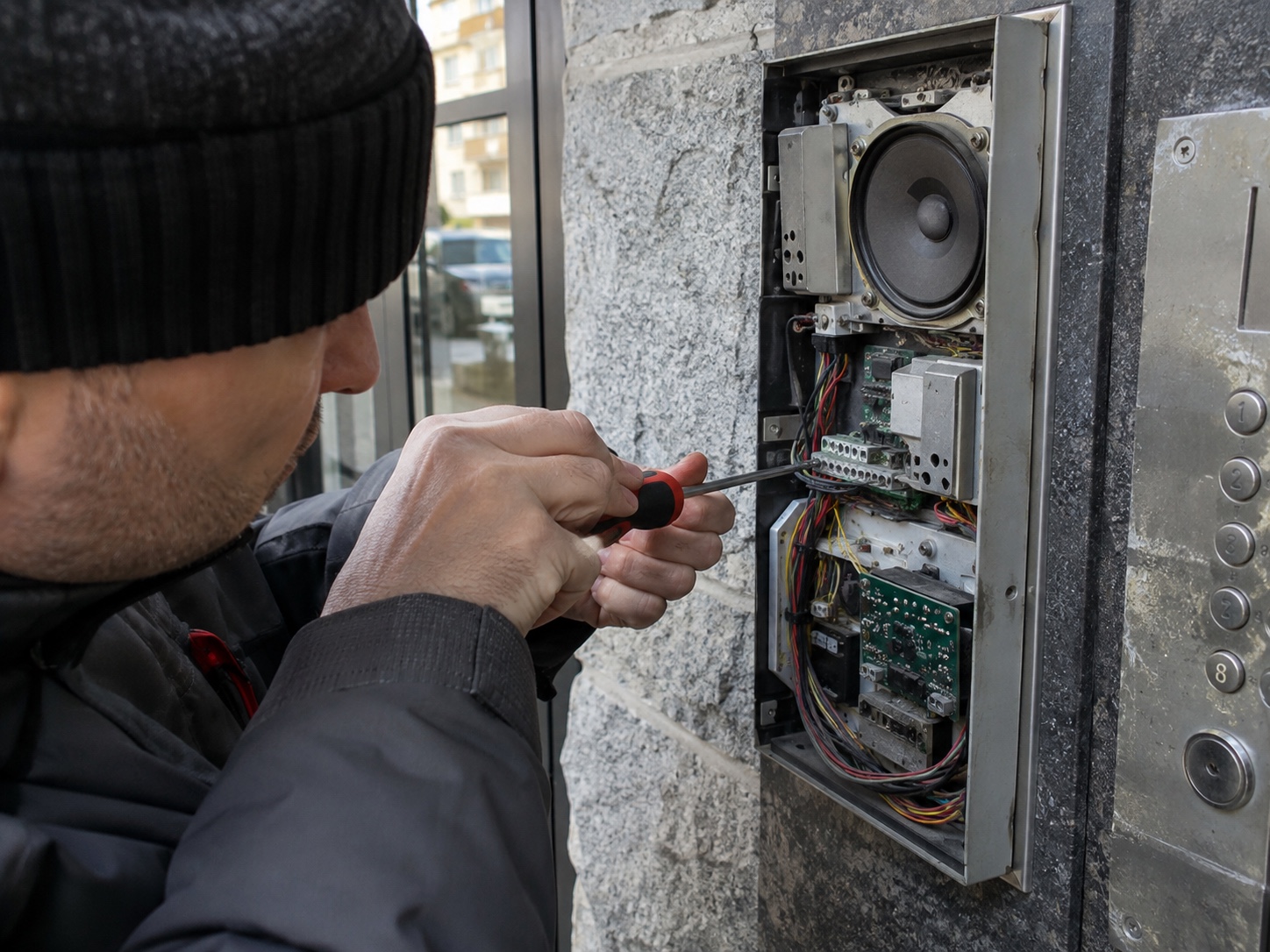
A blank camera image or silent intercom can make the hidden cable seem like the obvious culprit. Yet the same user-facing symptom can originate in the endpoint, its power source, the network, a setting or another shared component. Begin by describing which service has failed. For an intercom, distinguish the call signal, conversation, picture and authorized door release. For a camera, distinguish live viewing, recording and remote access. These observations define the fault more precisely than saying the system is down. They also prevent working functions from being disturbed without a reason.
Ask for a diagnosis that connects a measured finding to the reported failure. A damaged-looking cable can deserve attention without explaining the current complaint, while a cable that appears tidy can have an internal or termination problem. The objective is not to prove that every component is perfect before taking action. It is to establish enough evidence to choose a proportionate repair and then verify that the intended service has recovered. Owners can support that process through records and ordinary-use observations, leaving electrical measurements and security equipment connections to the professionals responsible for the system.
Capture a useful incident record before conditions change
For an intermittent failure, record the time, affected device, observed symptom and what happened immediately before recovery. Include whether it was raining, whether the door was moving, whether other devices failed, or whether the issue followed a scheduled activity. Use the same device names as the system display. A note that the rear camera disappeared at a specific time gives a technician something to compare with recordings and logs. A statement that cameras sometimes fail at night is much harder to investigate because it leaves both the timing and the affected equipment uncertain.
Preserve relevant screenshots and error messages through the normal authorized interface, while avoiding public exposure of private video or access credentials. Record any restart already performed and whether it restored service temporarily. Repeated restarts before a visit can erase useful timing relationships or change the symptoms the technician sees. That does not mean leaving an essential service unavailable merely to preserve evidence; operational needs still matter. It means noting the original condition and the intervention when possible. A short chronological record is usually more useful than a long narrative written from memory after several different people have tried fixes.
Use the pattern of affected devices to narrow the question
Compare the failed device with others that share equipment or a route. If several cameras disappear together, ask what they share: a switch, power source, network uplink or recording service. If only one intercom station cannot hear speech while others work, the branch serving that station deserves attention alongside the station itself. These patterns establish priorities, not conclusions. A shared symptom can still have more than one cause, and a device that remains online does not prove the entire common system is healthy under every operating condition.
For networked equipment, separate local service from off-site viewing where the design permits that comparison. A camera visible locally but unavailable remotely does not immediately implicate the cable at the camera. For an intercom with working conversation but failed door release, a control or door hardware issue may need investigation. Ask the technician to draw the relevant path and mark the boundary between what is working and what is uncertain. This can prevent a proposal to replace a long concealed run simply because it happens to connect to the device named in the complaint.
Define a controlled professional test scope
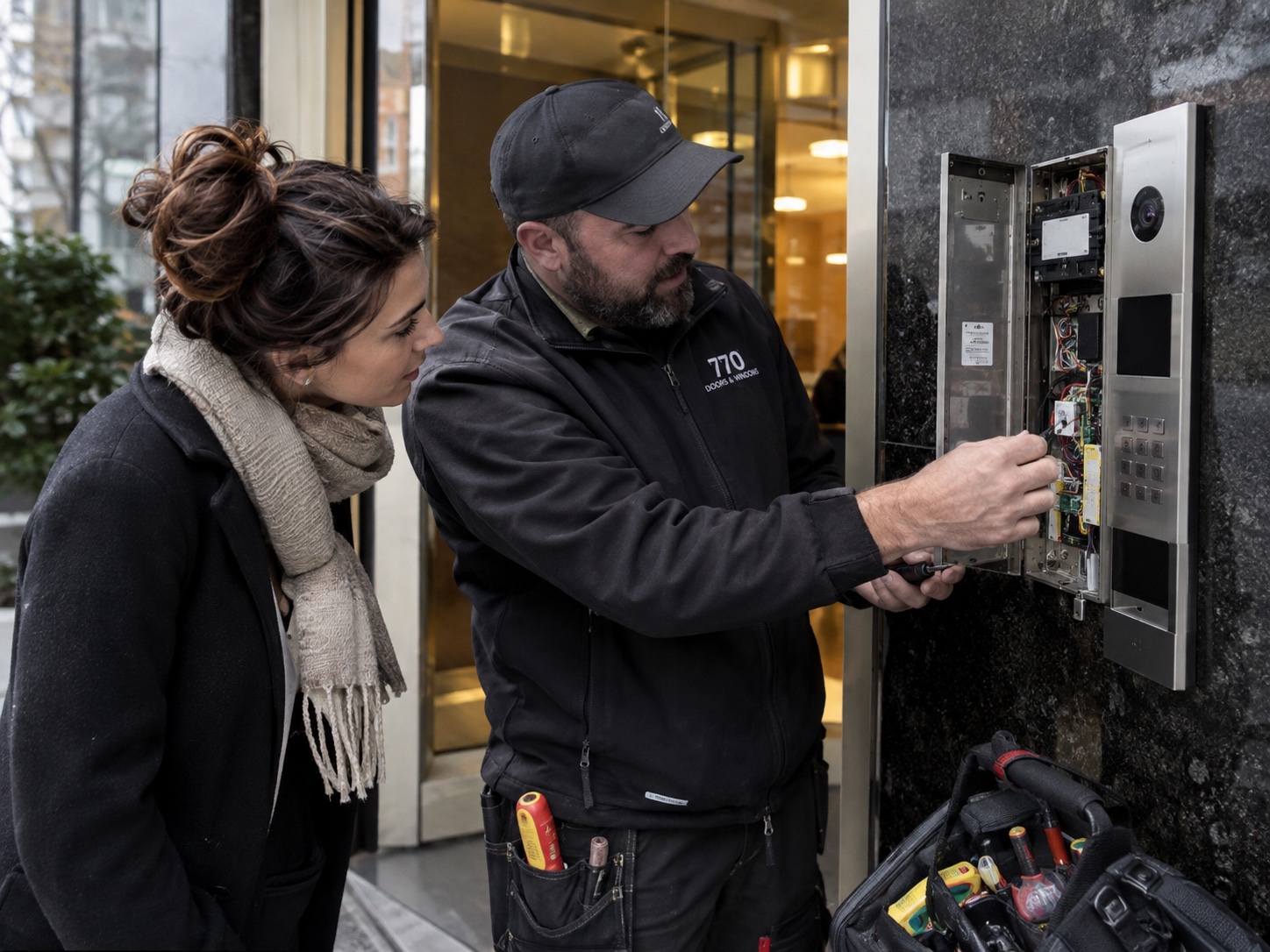
Testing should identify the exact run and the equipment connected to it before any disconnection. The professional needs to understand whether the connection carries Ethernet, a proprietary intercom signal, power, control or several supported functions together. A test suitable for ordinary network cabling may be inappropriate for a different circuit. Agree which services will be interrupted, when occupants will be informed and how authorized access will be maintained. Do not authorize an improvised bypass of door hardware as a convenient way to keep testing. The operational arrangements should preserve the intended protection and exit functions.
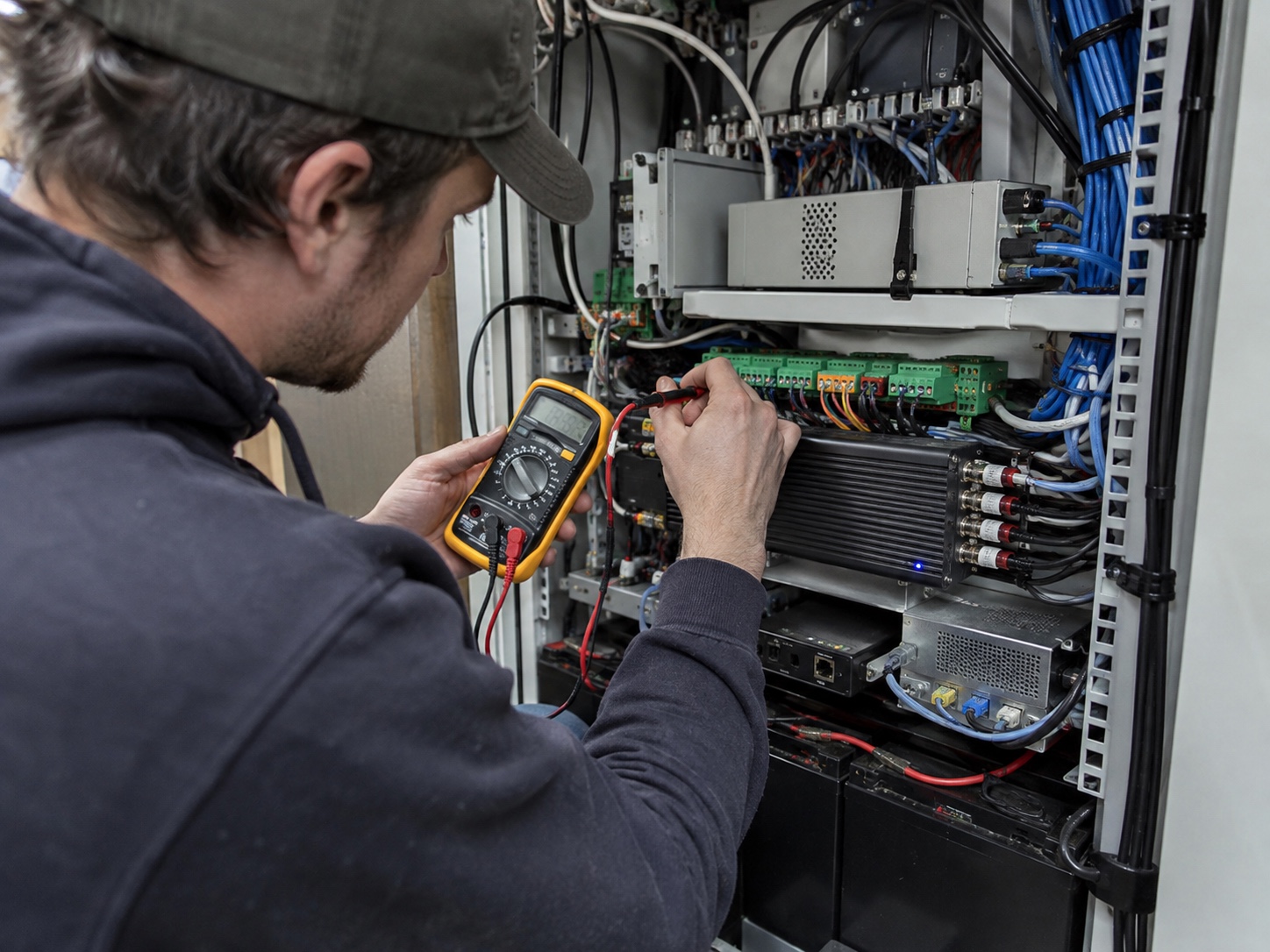
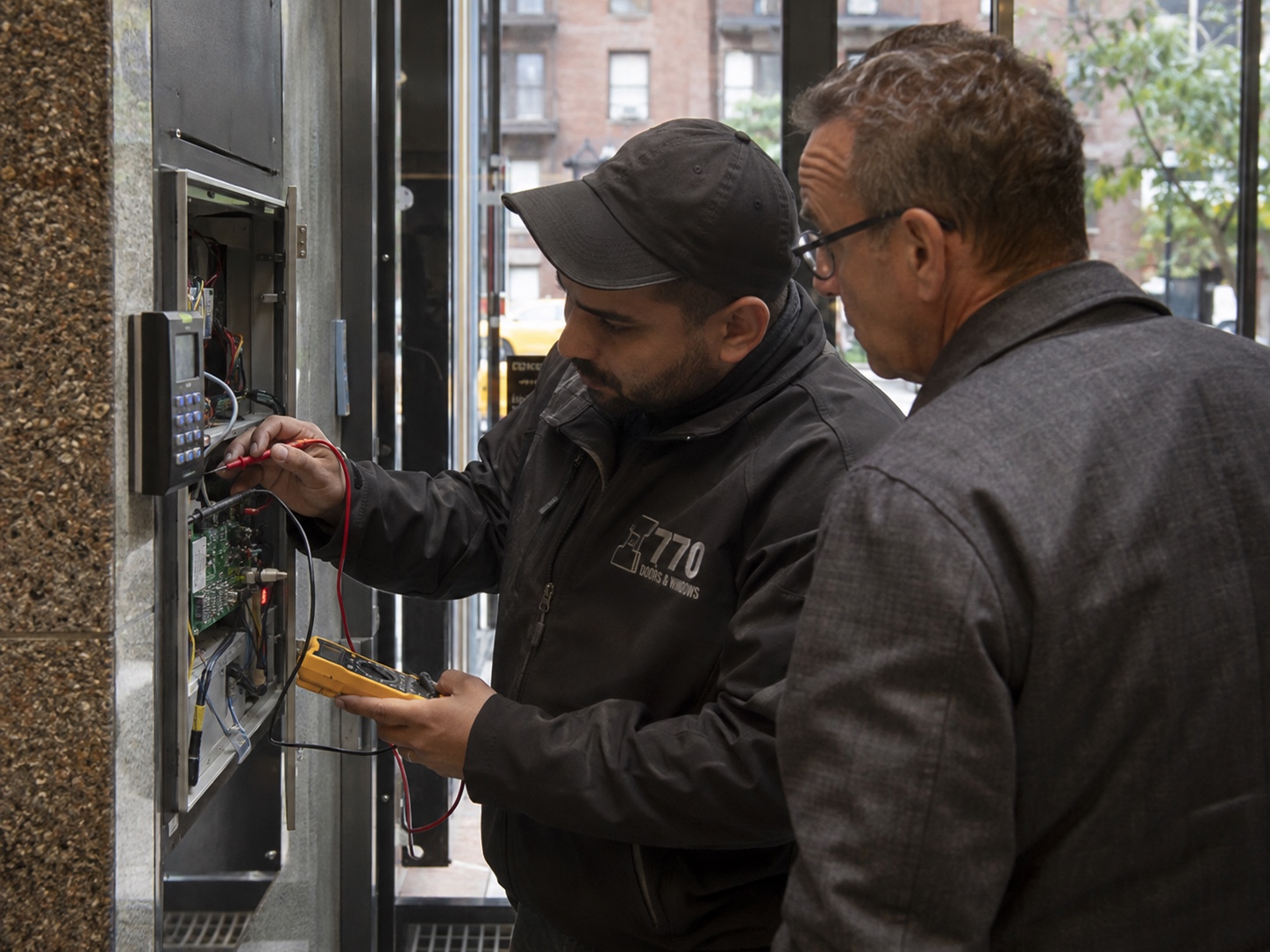
Ask what will be measured and what each result can decide. The technician may need to isolate the cable from equipment using the manufacturer's procedures, compare it with a known suitable connection, or examine a power source separately. Owners should not bridge terminals, probe live security wiring or move connections between unfamiliar ports. The useful management role is ensuring that the test has permission, access and a clear record. If a temporary diagnostic connection is needed, its supervision, physical safety and removal should be included in the plan rather than left as an undocumented new permanent route.
Understand continuity and wire-map results
Continuity establishes whether an electrical path exists under the conditions of the test. On copper Ethernet cabling, a suitable wire-map test can identify connection errors such as opens, shorts, crossed pairs and split pairs. Fluke Networks explains that a simple continuity check can miss a split pair even when conductors connect from end to end. A split pair uses conductors from different twisted pairs for a signal pair, so matching end connections can still leave the signal vulnerable to interference. Its guidance also distinguishes wire mapping from bandwidth performance testing. These are limited but important facts: a basic pass does not mean the installed connection has been shown suitable for every data rate or powered device.
Ask whether the reported result covers the installed run alone or includes the patch leads and connectors used in service. If a technician tests a different boundary from the one carrying the fault, a passing result can be misunderstood. Request the cable identifier, tested endpoints, test date and observed finding in the report. For a non-Ethernet intercom circuit, ask for the corresponding manufacturer-directed checks rather than expecting a network cable report to answer every question. The report should describe what was actually tested, not simply use a broad phrase such as wiring checked.
Know when performance testing adds useful evidence
Fluke Networks separates cable verification, qualification and certification because they answer different questions. Qualification evaluates whether a link can support a selected network application or speed; certification evaluates a defined set of cabling parameters against selected limits. The appropriate choice depends on the job. A repair investigation may need different evidence from a new structured cabling installation with a specified acceptance requirement. Ask the contractor to explain the selected test and its scope in ordinary language. The name of an expensive tester does not by itself establish that the relevant test was performed.
A useful performance report names the link, test configuration and limit used, and preserves the result rather than reducing everything to a verbal pass. Ask whether results were collected before and after the repair and whether the same test boundary was used. A good result is evidence about the tested connection under stated conditions; it does not establish that the camera settings, recording service or entire entry system work correctly. Keep the cable evidence and the service demonstration together. Each answers a different part of the property owner's question about whether the repair is complete.
Test power delivery under the conditions that matter
A powered device can display a light or begin starting without demonstrating stable operation through its full intended use. For Power over Ethernet equipment, advertised power capability and power delivered through the installed path are distinct observations. Fluke's LinkIQ documentation describes a load test that checks delivery through the cabling, illustrating why a power assessment can require more than identifying a PoE port. The appropriate instrument and procedure depend on the equipment. Ask whether the investigation considered the complete power path and the device's requirements rather than relying on an indicator alone.
Record whether failures coincide with a particular supported feature or operating state. A camera that becomes unreliable when additional functions activate deserves testing under that condition; the timing does not automatically prove a cable problem. The source equipment, total connected demand, terminations and endpoint may all need consideration. For other intercom or entry circuits, the professional should use the specified voltage and operating conditions for that system. A written finding should explain where the measurement was taken and what the device was doing. A reading taken at an unloaded supply is a different piece of evidence from delivery at the operating endpoint.
Treat distance-to-fault readings as clues along a route
Some cable instruments estimate distance to a detected fault. That can help narrow a search, but the distance follows the cable, not a straight line across the building. A reading may correspond to an accessible connector, a rise through a ceiling or service slack near an enclosure. Ask the technician to relate the result to the known route before opening finishes. If the actual path is undocumented, that uncertainty should remain visible in the diagnosis. A number on a screen is useful evidence without being an exact drilling coordinate.
Where appropriate, comparisons from the two ends and inspection of known intermediate points can strengthen the interpretation. The owner can provide renovation photographs or drawings that explain where the cable turns, but should not disturb concealed services to search for it. Ask whether an accessible termination can be assessed before a wall is opened. If opening a surface becomes necessary, document why that location was selected and who will restore it. The aim is a targeted investigation in which each disruptive step follows from the evidence already collected, rather than broad exploratory demolition around a guessed route.
Intermittent faults need conditions, not just more repetitions
An intermittent connection may pass during a dry, quiet service visit and fail under a different condition. Record associations with weather, door movement, temperature changes or nearby activity without presenting them as established causes. A technician can then decide which conditions can be reproduced safely and which require a later observation. Do not spray water onto equipment, shake live connections or flex cables to manufacture a failure. Such experiments can damage the installation and create misleading evidence. Ordinary use and properly planned professional testing should supply the relevant comparison.
Visible moisture, staining, damaged protection or an unsupported connection deserves documentation even when the system currently works. The repair question includes why the condition developed. Replacing a corroded connector without addressing the route by which moisture reaches it can leave a recurring problem. Equally, a previous leak nearby does not prove water entered the cable. Ask the technician to separate confirmed defects, plausible contributing conditions and issues that were not reproduced. That distinction helps the owner decide whether immediate repair, further observation or a broader route correction is justified.
Choose between termination repair and replacing a run
A localized, accessible termination defect may support a focused repair when the remaining cable is suitable and tests adequately afterward. Replacing the complete run becomes more persuasive when damage extends into the cable, its suitability cannot be established, an inaccessible joint causes recurring trouble or the route exposes it to repeated damage. Ask what evidence supports the recommended boundary of replacement. A complete new run is not automatically necessary because one connector failed, and a fresh connector is not enough when the surrounding installation remains unsuitable for its service.
Any repair method should be appropriate for the specific connection and documented. Do not accept an improvised hidden splice simply because a live image returns. Discuss service access, environmental protection and how the repaired path will be tested. If the existing route caused the damage, compare the implications of correcting that route with continuing to maintain the same vulnerable location. Also identify what happens to abandoned cable and labels so later workers do not confuse old and active connections. The decision should leave a traceable, maintainable path rather than a collection of undocumented workarounds.
A hypothetical camera fault with misleading first impressions
Imagine a business owner reporting that one camera repeatedly disconnects after dusk. Other cameras remain available, and an earlier basic continuity check was reported as passing. The owner assumes the camera needs replacement. A technician instead compares the incident times with the device's operation, reviews the power path and tests the installed connection under an appropriate load. This is a hypothetical investigation: evening timing alone cannot identify the cause, and the same symptom could arise from settings, source equipment or the endpoint itself. The earlier test is useful only within its limited scope.
Suppose the investigation establishes a defective accessible termination and the remaining run passes the selected tests after repair. The handover should include the original finding, the repaired location, the new results and observation through the condition that previously produced the failure. If the symptom cannot be reproduced immediately, a defined follow-up observation remains necessary. The lesson is not that night failures always involve power or connectors. It is that a passing basic test and an offline message can coexist, and that a repair decision should be based on a more specific explanation than either observation alone provides.
Close the job with cable evidence and service evidence
Request a report that identifies the affected service, confirmed defect, repair performed, tested endpoints and results. It should also note temporary changes, restored settings and unresolved conditions. Keep before-and-after evidence under the same device and cable identifiers so the next service visit does not begin from scratch. Sensitive configuration and video records should remain with authorized personnel. A concise, consistent record is more valuable than pages of unlabeled readings. Where the contractor could not establish the cause, the report should say so and identify the next diagnostic step instead of describing an unverified repair as complete.
Finally, demonstrate the user's actual task. For an intercom, that may include a call, conversation, picture and authorized release at the intended door. For a camera, verify the relevant live view and an actual new recording, then check remote access if included in the scope. Confirm that adjacent devices affected by testing have returned to service. Match the observation period to the original complaint rather than accepting one successful moment as proof against a recurring pattern. Completion means the documented repair and the recovered service agree, with any remaining uncertainty clearly assigned for follow-up.