 (347) 541-4824
Define the entry service the building must preserve
An intercom retrofit changes a daily building service, not just a panel on the wall. Begin by describing how people currently enter: residents using their own credentials, visitors calling apartments, deliveries reaching a staffed desk, and contractors arriving by appointment. Identify which of those functions depend on the intercom and which use separate equipment. This becomes the operating brief for the project. A replacement that offers attractive new features can still be unsuitable if it removes an answering method that residents rely on or interrupts an entrance function that management assumed would remain available throughout the work.
Define the improvement in terms people can observe. The property may need intelligible conversations, a readable directory, remote answering for selected users, or simpler management of tenant turnover. Rank those needs and identify what must continue during installation. Ask residents about practical limitations before selecting equipment, including difficulty using a touchscreen, hearing alerts, or maintaining a smartphone account. These observations guide the design without claiming that a product automatically satisfies every accessibility requirement. The responsible design professional should assess the actual entrance and applicable requirements before the building commits to a configuration.
Build an inventory that reflects the installed system
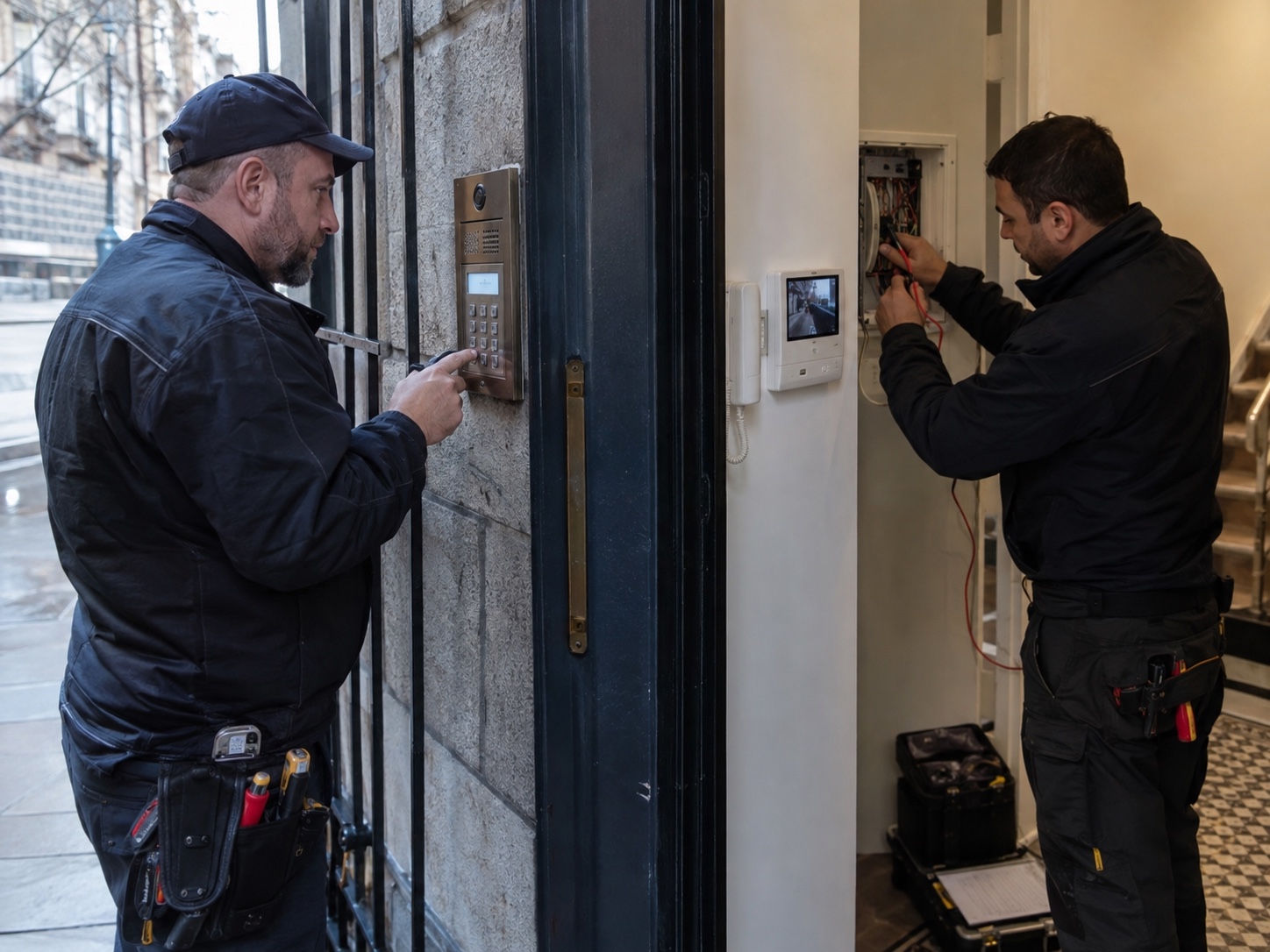
Collect available drawings, equipment model information, prior service reports, and photographs of accessible labels. Count the entrances, tenant stations, reception positions, and any integrations that management expects to retain. Note vacant units and inaccessible apartments separately from confirmed equipment locations. An old drawing is a starting point, not proof that every connection remains as shown. Owners can gather records and external observations without opening cabinets or tracing live circuits. The installer should verify the actual arrangement through an appropriate survey and document important differences before issuing a final scope.
The survey should identify shared components as well as visible stations. A device that looks independent may share a supply, cable segment, or controller with other destinations. That affects both replacement options and the order in which work can proceed. Ask for a plain description of which parts will be retained, removed, or added, including interfaces to the door hardware. Mark unresolved items clearly. A proposal based on assumed apartment access or unverified cable routes should identify those dependencies so management can resolve them before a delivery date or shutdown window becomes difficult to change.
Treat existing wiring as a candidate that must be evaluated
Reusing sound wiring can reduce disturbance, but the number of available conductors is only one part of compatibility. Cable type, condition, length, routing, connection quality, and the way branches are arranged can all matter to the proposed system. A continuity result alone does not establish that a cable will support every required function under the manufacturer's limits. Ask the installer what tests and documentation support reuse and where a replacement route would be needed if the existing path is unsuitable. Make that alternative concrete enough to understand its effect on apartment access and finished surfaces.
Aiphone's GT Standard System Audio/Video reference distinguishes home-run and loop arrangements and specifies wiring and power requirements for that product family. This is a useful example of why a general claim about reusing existing wires needs a model-specific design behind it. Its details should not be transferred to another manufacturer's system. Ask the proposal to identify the exact equipment combination and the applicable installation guidance. Where a branch remains uncertain, a representative trial can reduce risk before full deployment. Agree who restores affected finishes and how retained cable routes will be labeled for future maintenance.
Choose answering methods around the residents who will use them
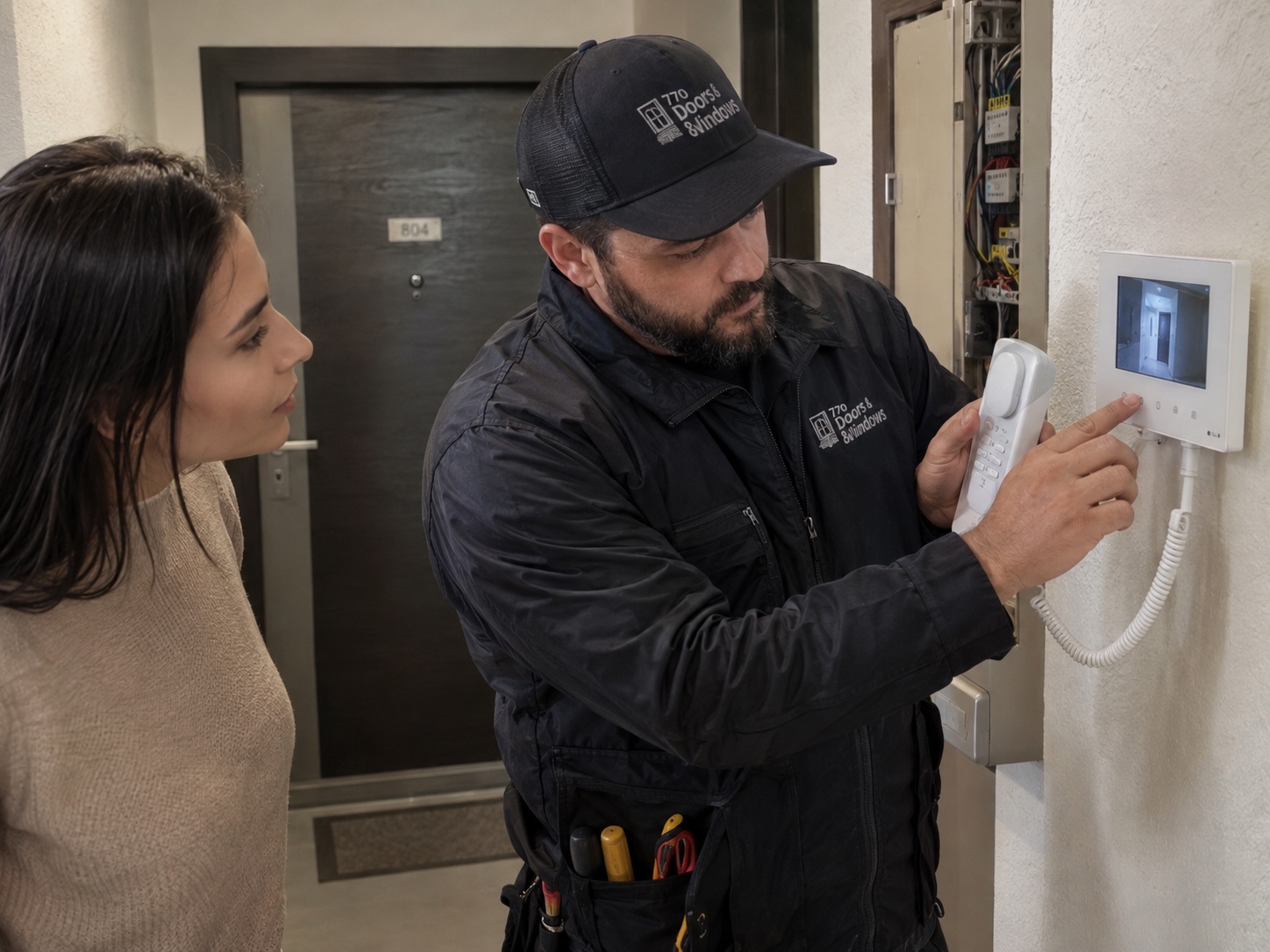
An app-only approach, fixed indoor stations, and a supported combination create different responsibilities. Consider residents who do not use compatible smartphones, people who need a consistent physical answering location, and businesses that need several staff members to receive visitors. Ask which functions continue without a resident's mobile data connection and which require a service platform. These answers depend on the selected architecture. Avoid treating either wired or cloud-connected equipment as inherently suitable for every building. The chosen arrangement should be demonstrated against the operating brief, including the residents whose needs are least like those of the project organizer.
Plan for changing households and workplaces. How will a replacement phone be enrolled, a departing resident removed, or a temporary reception assignment changed? Decide who provides routine assistance and what the installer is expected to document. A system that management cannot administer comfortably may create recurring confusion after a technically successful installation. In Brooklyn apartment buildings and Long Island mixed-use properties, differing tenant schedules can make a single group training session impractical. Offer a concise resident guide and an individual confirmation process so each occupied unit has a working answering method before its previous arrangement is retired.
Review the door interface and outage behavior explicitly
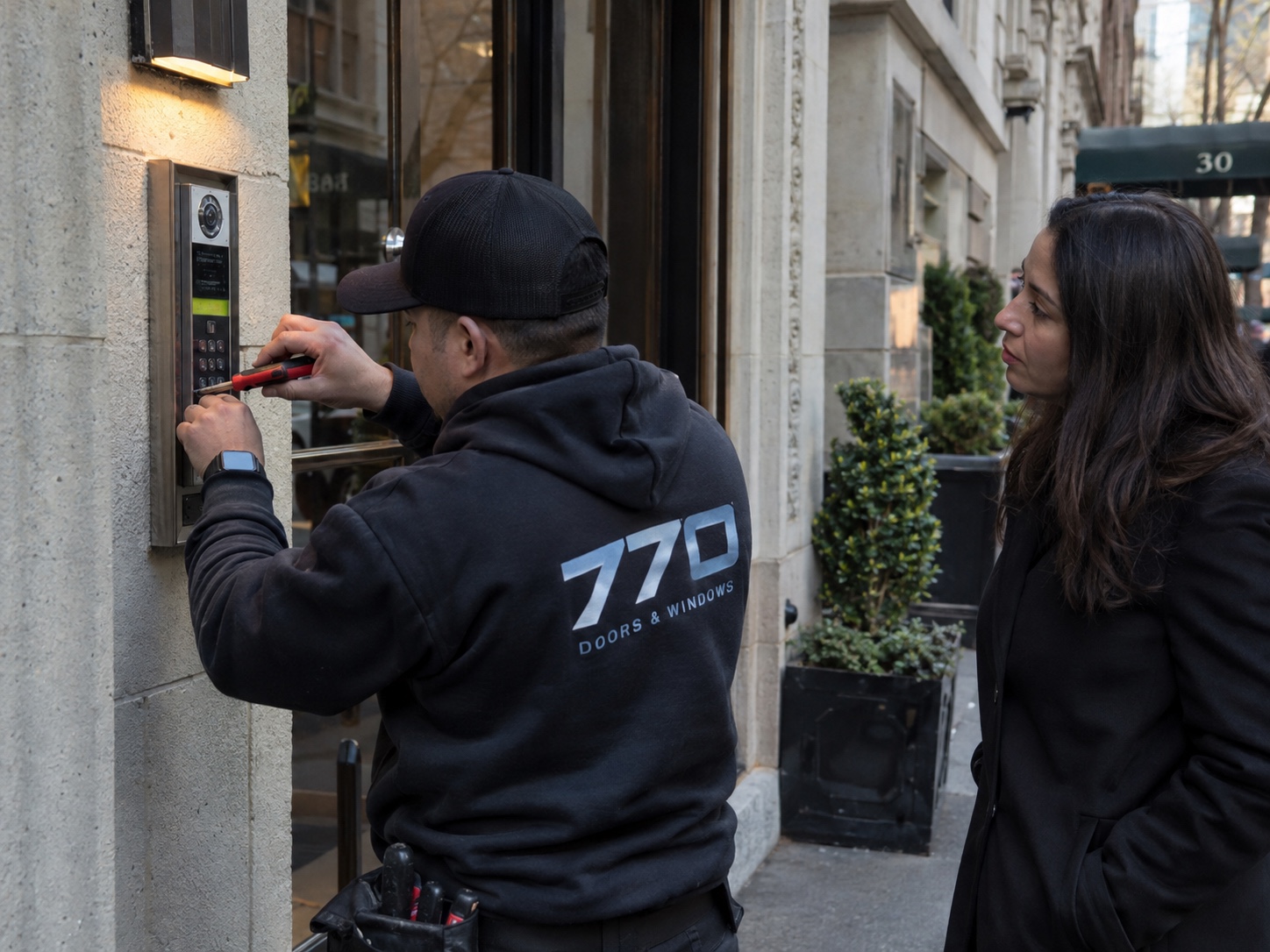
The entrance panel, release interface, lock hardware, and physical door should be assessed together. Retaining the existing lock does not automatically make it compatible with a new intercom output or control arrangement. The relevant professionals should verify the installed equipment, required power, supported interface, and normal closing and latching behavior. Management needs a clear description of what an authorized release command will do at each entrance. Do not accept a successful relay indication as the entire door test. The practical outcome is that the intended person can enter and the door then returns to its intended condition.
Discuss loss of building power, local network connectivity, internet service, and any cloud dependency as separate conditions. Ask which functions remain available in each case and how that conclusion will be established for the chosen design. Door release and egress behavior depend on the actual hardware and system arrangement; there is no universal setting appropriate to every retrofit. Any planned outage tests need coordination by the responsible professionals and building management. Backup equipment should be evaluated as part of the complete required path, because supporting one component does not establish that the whole visitor-entry process will continue.
Prepare directory information and management ownership early
A clean tenant directory requires more than copying names from the old panel. Reconcile unit identifiers with management records, confirm the display name each unit should use, and separate visitor-facing information from private contact details. Identify business destinations that change after hours and households needing more than one answering device. Obtain information through the building's established process and limit access to the people configuring the system. A migration can otherwise reproduce old errors in a more prominent digital directory. Keep a dated master list so last-minute resident changes do not become competing versions of the same configuration.
Aiphone's multi-tenant Remote Management setup guide separately addresses units, station assignments, and uploading settings. The specific workflow belongs to that platform, but it demonstrates why administrative structure is part of installation work. For the selected system, establish who controls the building account, who can enroll residents, and how those responsibilities transfer when management changes. Store configuration backups and administrative access through an appropriate controlled process. Residents should receive the access they need for their own entry functions, while property-wide administration remains with designated people. Include tenant removal and replacement-device enrollment in the handover demonstration.
Prepare network and configuration work before the entrance changes
If the proposed intercom uses the building network, involve its administrator before equipment arrives. Confirm the intended equipment locations, supported addressing approach, available connections, service dependencies, and responsibility for troubleshooting. Do not assume that a convenient spare network socket provides every required condition. The administrator and installer should agree on the selected product's documented requirements and how changes will be recorded. For systems without that dependency, avoid adding unnecessary network work to the scope. The purpose of preparation is to settle the real dependencies, not to make every retrofit follow the same technical checklist.
The Aiphone IX/IXG multi-tenant programming guide describes pre-deployment configuration for its supported equipment and recommends early coordination with the network administrator. Where the chosen system offers an equivalent supported process, use preparation to reduce work that must occur while entry service is interrupted. Distinguish settings saved in a configuration tool from settings actually applied to installed devices. Labels, unit assignments, and software versions should be checked before the final changeover. Preparation does not replace site testing, but it can prevent the entrance shutdown from becoming the first opportunity to discover missing account access or an unresolved configuration decision.
Use a pilot that represents the difficult parts of the building
A pilot is valuable when it tests the uncertainties in the proposed design. Select a representative long or complicated cable route, a typical resident station, and any answering method important to the property. An easy demonstration beside the equipment cabinet may not reveal issues at a distant apartment. Define what the pilot will establish and how it will be conducted without interfering with active circuits or unauthorized door operation. The installer should determine whether an isolated trial, a supported temporary arrangement, or another approach is appropriate. Compatibility between old and new equipment must be established rather than assumed.
Evaluate the complete visitor experience during the pilot. Can a person find the destination, understand the call feedback, converse from a natural position, and request the intended entry action? Can the resident hear and operate the answering device comfortably? Check the administrative tasks management will perform, not just the visitor-facing screen. Record adjustments before repeating the pilot. If the test reveals a limitation, revise the design or explain the tradeoff before ordering the remaining work around an unsuitable assumption. A pilot is a decision point with agreed criteria, not a demonstration that must be declared successful.
Schedule apartment access as carefully as equipment installation
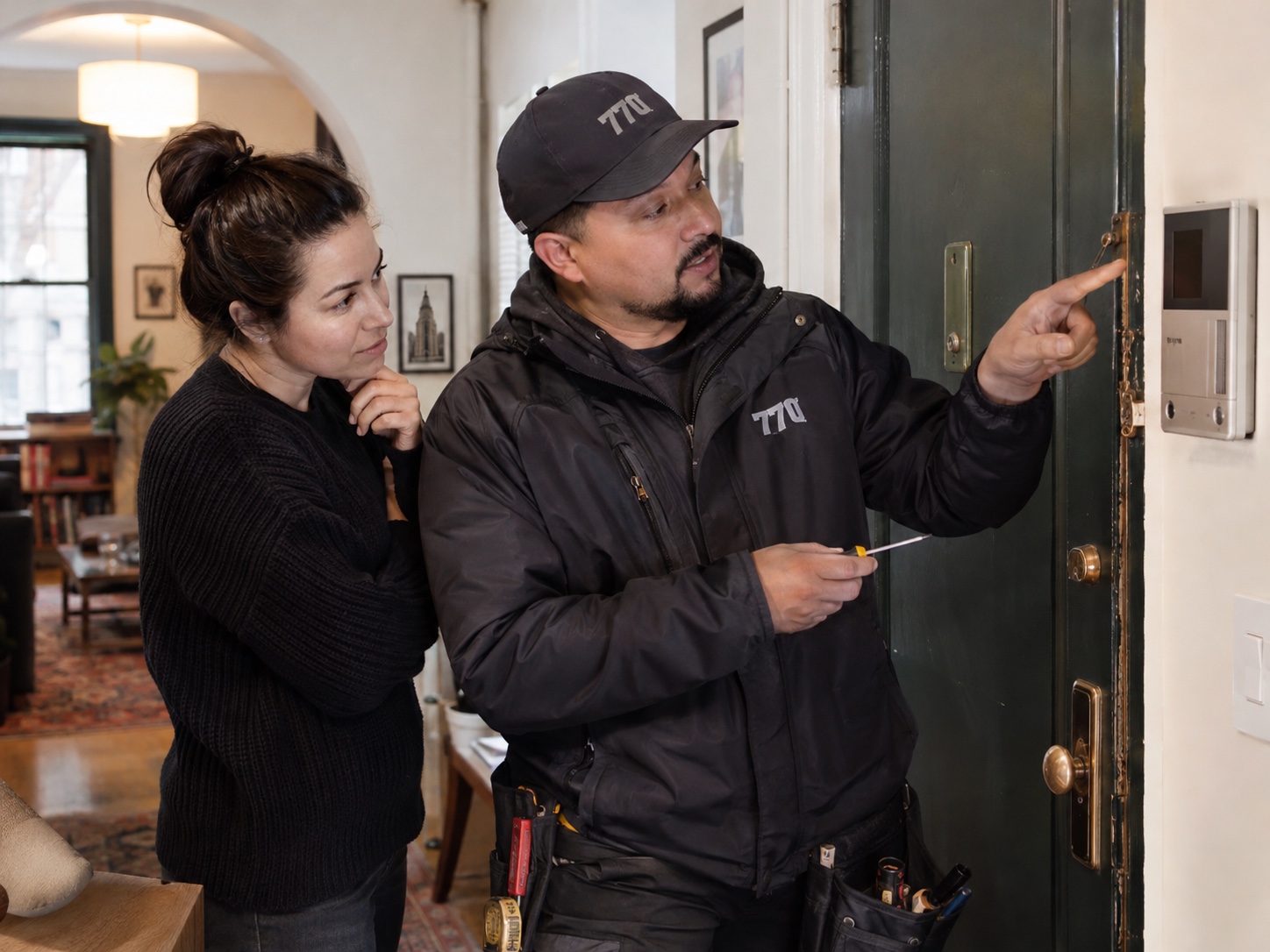
Tenant access is often a project dependency in its own right. Identify which units require indoor work, how appointments will be confirmed, and how unavailable residents will be handled. Do not count an unanswered notice as a confirmed access arrangement. Explain what people need to do, which entry functions may be interrupted, and who will provide updates if the schedule changes. Avoid asking residents to publish personal availability to a building-wide group. Management can coordinate privately while giving the installer a clear list of confirmed appointments and unresolved units.
Plan the work sequence around shared infrastructure and the available appointments. Depending on the supported design, one inaccessible station might affect a small branch or a larger changeover. Resolve that question before dismantling the old arrangement. Include the time needed for configuration, testing, cleanup, and resident instruction, rather than scheduling only the physical mounting work. Businesses may need different notice periods from households, and a reception desk may need a temporary answering location. Each stage should end in a defined usable condition so delays do not leave occupants guessing which button, station, or entrance currently works.
Write the changeover and fallback plan before shutdown
The changeover plan should name who coordinates the work, who confirms resident communications, and who decides whether to proceed to the next stage. Describe what will be disconnected, which services are expected to remain available, and how visitors will be handled during the interruption. A fallback might involve a staffed entrance or another existing authorized procedure suitable for that building. It should not depend on leaving a secured door unmanaged or improvising shared access credentials. Confirm that the temporary arrangement can actually be staffed and understood for the period in which it may be needed.
Set criteria for pausing the changeover and identify any point after which restoring the former arrangement becomes more involved. A meaningful rollback plan describes a technically supported restoration path, the required retained components, and who can carry it out. Some designs will not allow a simple return once shared wiring or interfaces change; acknowledge that before the work starts. Keep old equipment and configuration records until the agreed acceptance stage permits their retirement. If the new system cannot serve an occupied unit as planned, the team should already know the interim arrangement and the person responsible for resolving the exception.
A hypothetical retrofit that changes after the pilot
Consider a hypothetical building with twenty-four apartments, one public entrance, and several indoor stations that are difficult to access. Management initially plans to reuse the existing cable routes and replace everything during one coordinated changeover. The survey identifies a branch serving upper-floor units whose condition is uncertain. Rather than treating that uncertainty as a note for installation day, the team arranges an isolated professional trial using a representative route and a confirmed apartment appointment. The trial shows that the proposed arrangement does not perform acceptably on that branch, even though the simpler route used for an earlier demonstration worked.
In this example, the design is revised to address the branch before the main shutdown is scheduled. Management also resolves access to the remaining apartments and confirms a staffed visitor procedure for the interruption. The revised plan takes the pilot finding seriously without abandoning sound portions of the existing infrastructure. At changeover, each occupied destination is checked before its old answering arrangement is retired. This is a hypothetical planning example, not a completed project or a promised schedule. It shows how a targeted early test can move uncertainty out of the period when residents are most affected by it.
Hand over a working service with accountable exceptions
Final acceptance should verify each commissioned destination and entrance against the agreed operating brief. Confirm directory accuracy, call delivery, understandable speech, video where included, and actual authorized door operation. Check the supported alternative answering routes that the building intends to use. Demonstrate ordinary resident entry separately from visitor calling so success in one does not conceal a problem in the other. Planned professional tests of outage or fallback behavior should be documented with their conditions. Any untested apartment or unresolved function belongs on a specific exception list with an owner and an agreed next action.
Management should receive equipment identification, the final system arrangement, controlled access to required accounts, configuration backups, and clear resident instructions. Demonstrate how to add or remove a tenant and whom to contact for equipment, network, or account issues. Schedule follow-up around normal use so difficulties not apparent during commissioning can be reported consistently. Retire the former equipment only when the agreed process permits it, and remove obsolete directory information that could misdirect visitors. The project is complete when everyday entry is understandable and manageable, and the people responsible for the building can maintain that result after the installation team leaves.