 (347) 541-4824
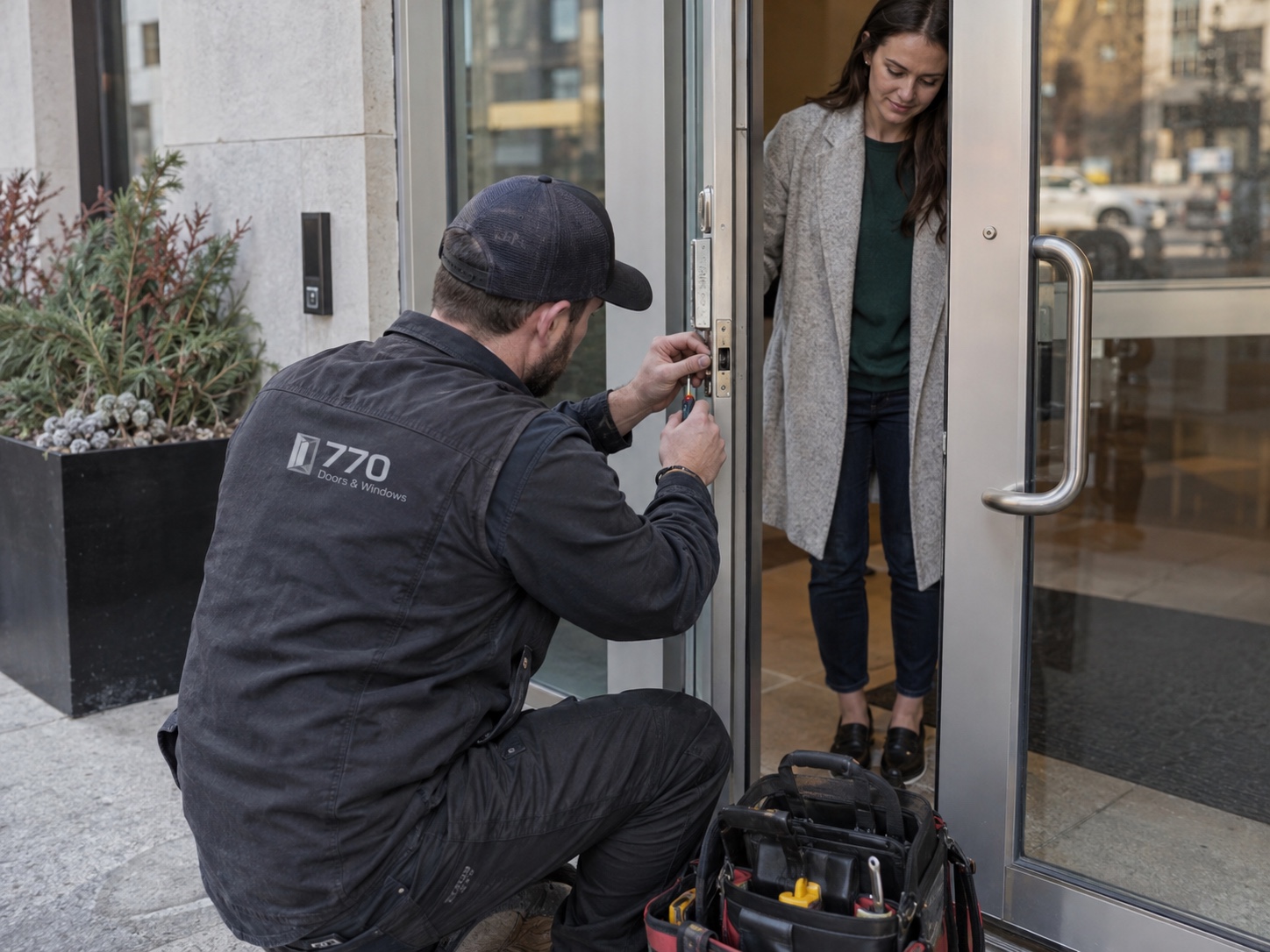
Start with the problem the work must solve
A request to change the locks can describe several different problems. Someone may have an unreturned key, the existing key may stick, or a business may need different access for staff and cleaners. Those situations do not necessarily call for the same work. Before choosing a product, write down the outcome you need for each opening: invalidate old keys, restore smooth operation, change who can enter, or replace an unsuitable lock. This separates an access decision from a hardware diagnosis and makes it easier to compare proposals that otherwise sound similar.
Begin with a simple door inventory. Identify the front entrance, rear entrance, garage connection, storage rooms and any shared spaces affected by the change. Record which keys operate which locks, without putting key cutting information into a widely shared document. Note whether each door closes normally and whether the key works differently with the door open and closed. Include the people authorized to approve changes and receive keys. A property manager should resolve the intended access arrangements before scheduling work, especially where several occupants rely on the same entrance. The inventory defines the job more reliably than a count of visible keyholes.
What rekeying changes, and what it leaves in place
Rekeying changes the key combination within a suitable lock cylinder so that the intended new key operates it. Much of the existing hardware remains. This can be a sensible response when the mechanism is serviceable but control over previous keys has been lost. Schlage identifies lost keys and moving into a home as reasons to consider rekeying. The practical objective is a verified change in access, not simply receiving a differently colored key. Where an existing master key arrangement is involved, the professional must understand which old access rights should disappear and which authorized rights should remain.
Rekeying does not straighten a door, rebuild a worn latch, strengthen damaged timber or change the basic function of a lock. If the door needs to be lifted to turn the key, that complaint deserves its own diagnosis. Equally, an old finish does not prove the internal mechanism has failed. Ask the professional to explain the condition of the cylinder and the rest of the assembly separately. Keeping sound hardware can preserve a matching appearance and avoid unnecessary disturbance to the door, but only when the retained parts still support the way the opening will be used.
Recognize evidence that points toward replacement
Repeated sticking, loose components, a latch that does not return consistently, visible damage or a key that only works after repeated attempts are reasons for assessment. They are observations, not proof that every part must be replaced. A damaged duplicate key can imitate cylinder trouble; pressure from a poorly aligned door can make an otherwise usable bolt difficult to move. Describe the symptom precisely: whether it occurs on entry, exit, locking or unlocking, and whether all authorized keys behave alike. Avoid repeatedly forcing the mechanism, since that can turn an intermittent problem into an unusable entrance.
Replacement becomes more persuasive when the actual hardware is damaged, the required repair parts are unsuitable or unavailable, or the lock function no longer matches the property. A shop changing from occasional storage use to frequent staff access may need a different operating arrangement, not merely fresh keys. Evidence of forced entry also warrants examination of the surrounding door and frame, because replacing an attractive exterior component can leave the underlying damage unresolved. Ask which observed defect the proposed replacement addresses and which other conditions still need work. The explanation should connect the recommendation to the opening rather than to hardware age alone.
Appearance should be documented separately from functional condition. A scratched handle may remain serviceable, while a clean-looking cylinder can still behave inconsistently. If the problem follows wet weather, note that timing rather than declaring the lock weatherproof or defective. An exposed gate, sheltered doorway and conditioned interior room impose different conditions on hardware, so a replacement should be selected for its actual location. Ask whether the manufacturer's intended use covers that exposure. Cosmetic matching is a valid preference, but it should be discussed openly as a preference rather than used as evidence that mechanical replacement is necessary.
Consider replacing the cylinder without replacing everything
The choice is not always limited to rekeying or replacing an entire lockset. Some assemblies accept a replacement cylinder or core while retaining usable trim and operating hardware. This can help when the key component is worn, when a compatible key system is required, or when the existing cylinder cannot meet the intended key control arrangement. Schlage documents removable cylinders on many of its residential locks, with model-specific servicing requirements. That example should prompt a compatibility question, not an assumption that every lock from every manufacturer has interchangeable internal parts.
Ask the professional to identify the exact assembly and explain how the proposed cylinder interfaces with it. Similar outside dimensions or a familiar key shape are not enough to establish suitability. Retained parts should be inspected before the option is accepted, and the finished assembly should be tested as a complete unit. For a property with matching decorative hardware, a cylinder-only solution may preserve the appearance while renewing the key mechanism. For a lock whose latch or body is also worn, it may leave the central reliability problem untouched. A useful proposal states exactly which parts remain and why they are worth retaining.
Separate one-key convenience from different access levels
Keyed-alike locks allow the same operating key to open the selected locks. A master key arrangement can instead provide different operating keys for different doors while an authorized higher-level key operates a defined group. These are different access plans. A homeowner seeking one key for front and rear entrances may only need keyed-alike hardware. A manager responsible for individually occupied spaces should first define who needs each door, rather than ask for one convenient key without considering the access it grants. Compatibility must be checked before promising that existing mixed hardware can share a key.
Schlage's keyed-alike guidance is specific to compatible Schlage products; it does not establish universal compatibility across brands or lock families. Give the professional a permission list in ordinary language: household members need both exterior entrances, a cleaner needs the service entrance, and a particular storage room remains restricted. Ask how a lost key would affect that arrangement. A key that opens many doors creates a wider response problem if it disappears. Also distinguish a request to discourage casual duplication from a documented system controlling who can obtain additional keys. The appropriate choice depends on administration as well as hardware.
Match replacement hardware to the actual door
A replacement should be selected around the existing opening and intended operation. Door material, thickness, preparation, handing, trim clearances and the frame all affect the available choices. Photographs of both sides and the door edge can help an initial discussion, but a visual resemblance on a product page does not confirm fit. This matters particularly when a door contains older mortise hardware or has already been modified. Ask whether the proposal reuses existing preparation, requires additional work, or leaves openings that need a proper repair. Those are installation decisions, not cosmetic details to discover afterward.
Discuss use from both sides of the door. The person entering may prioritize key convenience, while occupants leaving need the intended exit operation to remain clear and reliable. Accessibility, occupancy and any fire-rated assembly considerations require assessment of the actual installation; a product label alone does not settle the suitability of a replacement. Avoid choosing a function simply because it sounds more secure. Have the professional demonstrate the proposed daily operation and explain how it affects visitors, staff, cleaners and anyone who may have difficulty with small keys or tight turning motions.
Treat electronic permissions as a separate access inventory
If the door also has a keypad, smart lock or connected entry system, physical key work may address only one route of access. Existing user codes, app invitations, administrative accounts and scheduled permissions need their own review. Rekeying a mechanical cylinder does not automatically remove an electronic credential. Conversely, deleting a phone user does not invalidate a physical key. Make two lists: the mechanical access being changed and the electronic access being retained or removed. Keep credentials themselves out of ordinary work orders and shared photographs; the installer generally needs the access objective rather than a public list of secrets.
For a property transfer, establish who will own and administer the account after handover, using the manufacturer's supported process. Record any hub or service dependency that must remain available for the intended features. If the owner does not want ongoing account management, that preference may influence whether an electronic replacement makes sense. Do not let convenience features distract from basic mechanical condition. A new app interface cannot correct a door that binds, and a new cylinder cannot resolve an unwanted account administrator. Defining both tasks prevents a completed invoice from being mistaken for a complete access change.
Plan the changeover around people who need entry
An occupied property needs a changeover plan as well as a parts list. Choose a service window when the responsible person can attend, verify the work and distribute the correct keys. Identify deliveries, staff shifts, care visits or contractor appointments that could coincide with the change. Decide how people will learn that an old key has been retired and how their replacement will be handed over securely. Avoid leaving the distribution process to an informal pile of unmarked keys. The work is not operationally complete while authorized occupants are uncertain which entrance they can use.
For multiple doors, agree on the sequence and how access will be maintained during work without defeating the building's security arrangements. Label issued keys by an internal reference rather than a street address. Track the number delivered to the owner and the number subsequently issued. If some old locks remain temporarily, make that limitation explicit in the door inventory. A staged project can be reasonable, but everyone responsible for the property should understand where the old key still works. This is especially important when the purpose of the visit is to remove access associated with a missing key.
Ask for a scope that names the retained and replaced parts
A useful written scope identifies each opening, the proposed operation and the work needed to reach it. It should distinguish rekeying an existing cylinder, replacing a cylinder, replacing the complete lock and repairing the door or frame. Ask whether key preparation, installation, adjustment, testing and handover are included. If an initial inspection reveals a different problem, the revised recommendation should explain the evidence. This makes alternatives easier to compare without assuming that two proposals using the phrase lock change describe the same result. Photographs and door identifiers help keep the discussion attached to the correct opening.
Also ask what remains uncertain until the hardware is examined. Concealed damage, an unidentified cylinder or previous alterations may prevent a firm component choice from photographs alone. A clearly stated inspection dependency is more useful than premature certainty. Decide in advance who can approve a changed scope and how they will be reached. For a commercial property, include any coordination needed with the person responsible for the entry system or building hardware. The goal is to avoid a technician solving the cylinder problem while leaving an incompatible or unexplained relationship with the rest of the opening.
A hypothetical purchase with three different door conditions
Imagine a new owner taking over a small Brooklyn property with a front entrance, a rear service door and a storage room. The previous owner supplies several keys but cannot account for every copy. The front lock operates smoothly, the rear door requires lifting before its bolt moves, and the storage cylinder accepts a badly worn key inconsistently. The immediate access objective is the same for all three doors: retire the previous keys. The condition of each opening, however, suggests that one uniform replacement instruction would be a poor starting point.
After assessment, the front cylinder might be a suitable rekeying candidate. The rear opening might need door alignment work before its lock can be judged fairly. The storage room might need a compatible cylinder replacement while retaining a sound lock body. Those are hypothetical findings, not a diagnosis from symptoms alone. The owner could then choose whether the two exterior doors should share a key and whether storage should remain separate. Acceptance would include verifying the new permission pattern across all three doors, rather than checking each new key against only the lock beside which it was handed over.
Verify the result and leave a usable key record
Before handover, have the professional demonstrate smooth locking and unlocking with the door open and then normally closed, without unusual lifting or pressure. Confirm that the latch and bolt perform their intended functions and that trim remains secure during ordinary operation. Test every issued key in the doors it is supposed to operate. Where old access must be removed, arrange a controlled check that the relevant retired keys no longer work. In a master key system, the intended exceptions also need verification. Successful operation of one new key does not establish that the entire access plan has been implemented.
Keep a final record of door identifiers, installed hardware, the date of the change, key quantities and responsibility for future duplication or replacement. Store sensitive key system records securely, separate from broadly accessible maintenance notes. Note any door repair that was recommended but deferred, including how that limitation affects daily use. Explain the operating method to the people who will actually use the door, and ask them to report recurring resistance rather than adapt by forcing it. The best decision between rekeying and replacement is one that leaves both the hardware condition and the access arrangement understood.