 (347) 541-4824
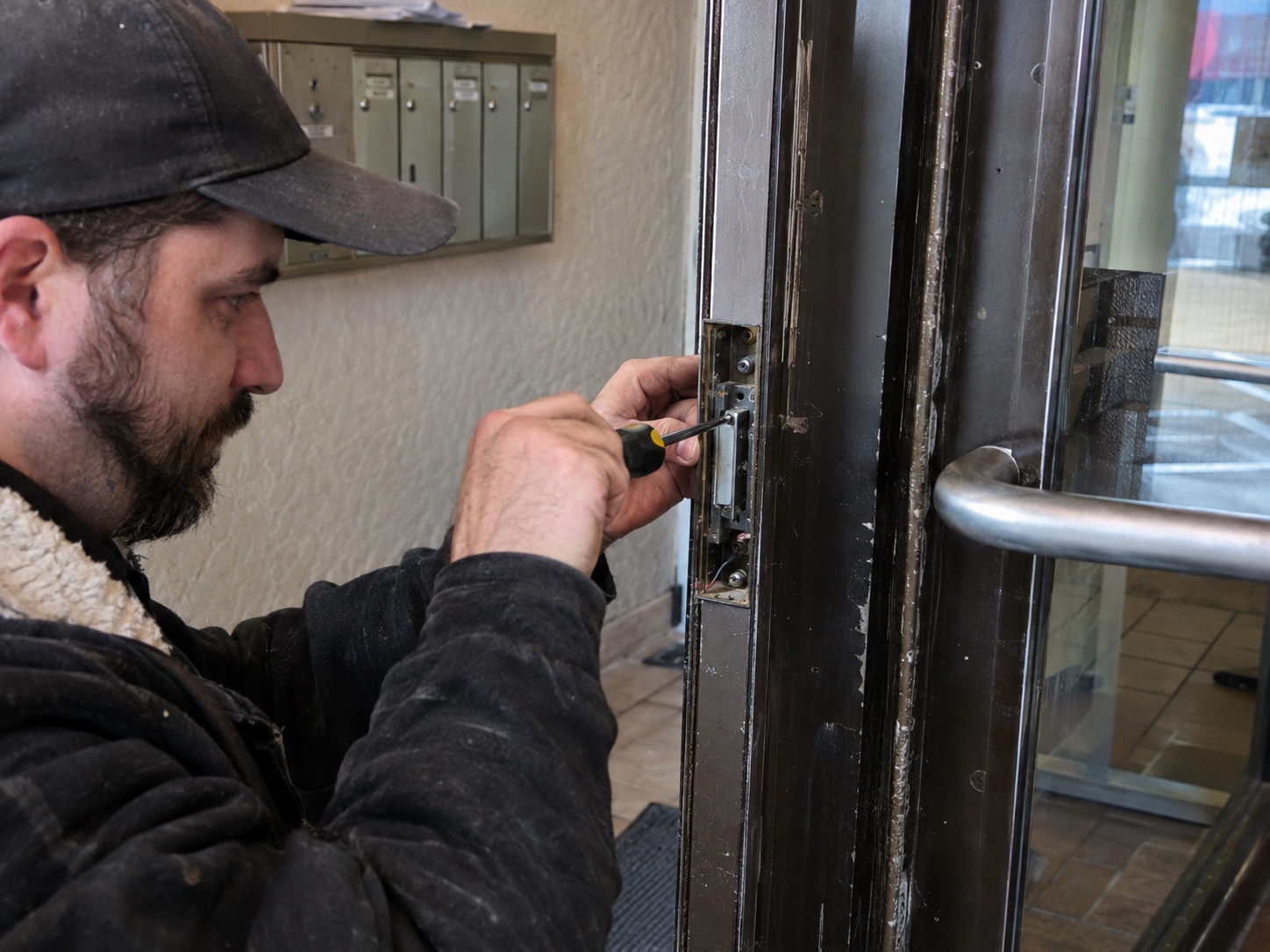
Understand the pressure present before release
An electric strike can receive an authorized release command yet remain difficult to open because the latch is pressing against its keeper. This existing load is commonly called preload. In a typical arrangement, the keeper is the strike component that permits the latch to pass when released. Pressure against it can interfere with the release action of designs that do not tolerate that load. Allegion's troubleshooting guidance for Von Duprin 6100 and 6200 strikes specifically identifies latch pressure as a mechanical issue. That explanation applies to the described hardware; another strike may have a different mechanism or documented preload capability.
Preload is not simply the weight of a heavy door. A comparatively light door can press firmly against the keeper because of seals, air pressure, or its final resting position. A heavy door can operate correctly when its hardware and geometry are appropriate. The useful question is what force the latch applies to the strike before and during the authorized release. Owners do not need to calculate that force to report a problem. They need to describe whether ordinary pressure on the door changes the outcome and whether the condition appeared after work on the opening or surrounding building systems.
Treat pressure-sensitive opening as a clue
A user may report that the door opens only after an awkward change of hand pressure, even though the reader indicates authorization. That is a useful mechanical clue, but it does not prove that preload is the sole fault. Misalignment, marginal electrical performance, or release timing can coexist with door pressure. Record what happens during an ordinary authorized attempt without forcing the leaf, lifting it, or manipulating the latch. Note whether the hardware clicks, whether the door begins moving, and whether the problem appears before movement or after it has started. These details help distinguish release failure from an obstruction later in the swing.
Avoid turning the user's workaround into the permanent operating instruction. A door that requires a particular push or pull sequence can be unreliable for visitors, people carrying items, or users with limited strength. The objective is predictable operation under the normal conditions for which the entrance is designed. During a service visit, a technician can conduct controlled comparisons with and without the relevant loading using the manufacturer's procedures. The resulting evidence should show whether reducing the load changes release consistently, and whether the electrical command remains correct during both conditions. One successful attempt after several failed attempts is not enough.
Look beyond whether the latch lines up vertically
Strike alignment involves more than placing an opening opposite the latch. The latch must arrive at the intended height, sit at the appropriate depth, and relate correctly to the keeper in the direction the door opens. A door that has sagged can scrape vertically, while one resting too far against a seal can load the keeper without an obvious scrape. Uneven gaps and fresh witness marks can guide inspection, but old marks may describe an earlier condition. Photograph what is visible and explain whether the symptom is new. The professional assessment should evaluate the door's present travel and final position.
Ask the technician to assess hinges or pivots, the frame, and the latch relationship before proposing to enlarge the strike opening. Removing material can hide a symptom while reducing the intended support or engagement of the lock. An entrance also needs to remain stable over repeated cycles, not merely line up when someone holds it in a favorable position. If there is significant door movement or frame distortion, the scope may require correction beyond the strike itself. The work order should explain which geometry is wrong and how the proposed adjustment addresses it without sacrificing secure latching after closure.
Evaluate seals and the door's resting position together
Weather seals can improve an opening's environmental performance while changing the forces acting on its latch. A newly installed seal may compress during closing and then push the door toward the keeper. That is a reason to assess the seal selection, installation, and hardware relationship together, not a reason to remove sealing indiscriminately. Record whether the complaint began after weatherstripping, threshold, or stop work. A service provider should inspect how the door rests after a normal closure and whether the seal is compressed as intended. A neat appearance alone does not show that the finished assembly operates correctly.
The proposed correction should retain the opening's intended functions. Ask whether the seal profile, mounting position, or other door adjustment needs professional correction, and who is responsible for that work. A strike replacement may be appropriate in some circumstances, but it should not serve as an unexplained substitute for resolving an unsuitable seal installation. Smoke or other specialized seals require assessment within the actual door assembly and relevant manufacturer instructions. Owners should not trim, remove, or relocate them as a diagnostic shortcut. Documenting the original weather or operational objective helps the contractor propose a repair that does not undo another necessary improvement.
Relate intermittent binding to air movement
Building pressure and exterior wind can change the load on a door, making a strike complaint intermittent even when no hardware setting changes. HES identifies air-conditioning pressure and weather among conditions addressed by the preload feature of its 7000 series. That does not establish that air pressure causes a particular property's failure. Compare the complaint with ordinary operating conditions: whether ventilation is running, another nearby entrance is open, or the symptom occurs during certain weather. Record those relationships without changing building equipment solely to experiment. A technician may need help from the person responsible for the mechanical systems to interpret the pattern.
A useful service appointment reproduces the relevant operating condition where practical. A quiet morning inspection may miss a problem that occurs when a business's normal equipment runs later in the day. Explain the schedule in advance so the appropriate observation can be arranged. If pressure is confirmed as a contributor, the repair decision may involve the door, the selected strike, or assessment of the building's pressure balance. Responsibility should be assigned clearly rather than passed indefinitely between trades. The manager needs to know what condition the repaired opening is expected to tolerate and what unresolved building condition still requires separate attention.
Balance closing reliability with release reliability
A closer adjustment can affect how the door reaches and settles into its latched position. Too little effective closing action may leave it unlatched; an unsuitable setup can cause harsh closing or an unfavorable final relationship with other hardware. These concerns cannot be resolved by assuming that every problem needs more closing force. Observe whether the leaf closes fully from normal use, whether it rebounds, and whether the difficult release occurs only after particular closures. The closer, seals, stops, and strike should be assessed as an interacting assembly. A repair that improves entry while preventing reliable closure exchanges one defect for another.
Have the door specialist use the closer manufacturer's adjustment procedures and evaluate the results at the opening. Owners should not randomly turn closer valves or add force to overcome a strike problem. Explain the observed priorities: the entrance should complete ordinary closing, secure correctly, and release predictably for authorized passage. Those outcomes also need to work for the people who actually use the door, rather than only under a technician's preferred handling. When the service proposal includes several adjustments, ask which symptom each addresses and how the combined result will be checked after all work is finished.
Confirm the strike matches the latch assembly
A strike must be suitable for the actual lockset or exit device, including the latch shape, travel, and engagement arrangement. A physically similar faceplate does not establish compatibility. On cylindrical locksets with an auxiliary deadlatch plunger, that plunger should remain depressed against the intended strike surface when the main latchbolt enters the pocket; it should not enter the pocket alongside the latchbolt. HES's technical guidance for the 1006 series explains that this incorrect position can contribute to preload and describes model-specific keeper shims used to establish the correct relationship. The practical lesson is to verify the complete hardware combination using its instructions. It is not permission to improvise shims or copy an adjustment from one strike family to another.
Ask the provider to record the lockset and strike models, including relevant faceplates or accessories. If one component was changed recently, compare the new combination with the documented intended arrangement. Increasing clearance until the door moves easily can leave excessive play or an incorrect latch relationship, so freedom of movement is only one acceptance criterion. The lock must also engage as designed after the door closes. Where records are missing, identification and compatibility assessment should be part of the visit. A diagnosis based only on the fact that the strike fits the existing frame cutout is incomplete.
Verify the electrical release under actual load
Pressure-sensitive behavior deserves mechanical attention, but electrical performance should still be checked. A sound from the strike does not prove that it receives the required supply throughout the release interval. Allegion's model-specific troubleshooting calls for electrical readings under load near the strike rather than relying only on the power source. A qualified technician should compare the installed model's requirements with the actual operating condition and review the command duration. The owner can provide event times and describe whether repeated attempts change the result, but should not open electrical covers or apply a separate power source to test the hardware.
Also verify the installed power mode and duty requirements before interpreting energization. A fail-secure strike uses power to release its keeper and stays locked when that power is removed; a fail-safe strike uses power to keep its keeper locked and releases it when that power is removed. Confirm which mode the actual model and installation use. Those labels do not by themselves establish how occupants exit through the complete lockset or exit device. Ask the technician to document the expected sequence and confirm it at the door. A longer release interval may address an unsuitable timing setting, but it does not eliminate mechanical preload. Correct electrical operation and acceptable mechanical loading should be demonstrated independently before declaring the combined repair successful.
Read preload capability as a qualified specification
Preload capability varies substantially among products. The HES 7000 sell sheet, for example, documents accommodation of up to 15 pounds of preload in fail-secure operation only. That limit is a specific published capability for that product and mode, not a universal target or permission to leave any amount of door pressure unresolved. Other strikes may require the latch to be clear of pressure during release. A replacement discussion should therefore use the proposed model's current documentation, relevant configuration, and actual application. Marketing language such as heavy duty or high strength does not answer the separate question of releasing under preload.
Holding strength and release-under-load capability describe different aspects of operation. A strike may resist substantial force when secured yet need a relatively unloaded mechanism to release normally. Ask which specification addresses the observed problem and what evidence suggests the proposed device is suitable. The installer should also consider frame preparation, latch compatibility, supply requirements, monitoring, and the rest of the opening. If a preload-capable strike is proposed, clarify which underlying door issues will still be corrected. A damaged hinge or unstable frame should not become an accepted condition merely because a different strike can tolerate more pressure during a demonstration.
Define a repair that preserves secure engagement
A useful proposal separates restoring the door's geometry from selecting or adjusting the strike. It should identify whether the main issue is latch position, seal pressure, hardware compatibility, an electrical condition, or a combination supported by observations. Approved adjustment features and manufacturer-specified accessories may allow a correction without replacing the whole assembly. Where wear or damage prevents a reliable result, replacement may be justified. Ask what finding supports that decision. Avoid authorizing unspecified filing, bending, or packing simply because those actions are described as making the door fit; the final engagement matters as much as the ease of release.
Agree on the finished behavior before work starts. The door should close and latch through normal use, remain secured when access is not authorized, and release through its intended operating sequence without special handling. If other specialists must address the frame or air balance, identify which checks remain pending until their work is complete. A contractor can then report a limited completed scope honestly rather than imply that every aspect of the opening was resolved. Retain the final hardware identification and any documented adjustment instructions so later maintenance does not inadvertently recreate the same latch pressure or clearance problem.
A hypothetical entrance after new weatherstripping
Consider a hypothetical small office where the strike starts clicking without reliably releasing after new perimeter seals are installed. Users notice that a change in ordinary door pressure sometimes allows entry during an authorized release. The technician confirms the command and electrical condition, then observes that the closed door's latch is loaded against the keeper. The seal installation and final door position are evaluated together. The finding does not automatically condemn the strike: the complaint began with a changed assembly relationship, and the repair should first address what made that relationship unsuitable while retaining the intended sealing function.
In this fictional example, the door specialist corrects the installation within the relevant product instructions and the latch no longer rests under the problematic load. Follow-up checks show consistent authorized release and correct latching after normal closure. If the building's ordinary pressure conditions had still produced unacceptable load, selecting suitable alternative hardware could have remained part of the assessment. The example illustrates a decision process rather than a promised outcome. Replacing the strike before investigating the recent seal work might have hidden the useful evidence and left the owner with a new component subject to the same unresolved loading condition.
Check release, relatching, and the original conditions
Acceptance should include repeated normal closing and authorized opening cycles, with the door allowed to settle naturally between attempts. Confirm that no special push, lift, or pull technique is required. Observe secure engagement after closure, appropriate release timing, and normal operation of the installed exit hardware. If monitoring is present, compare its reported state with the condition the provider has verified. The technician should assess latch and auxiliary-component relationships using the applicable instructions. Simply hearing the strike click several times while the door is held open does not test the load and alignment that caused the original complaint.
Repeat the relevant observations during the environmental or operating condition associated with the failure, where practical. If that condition is unavailable, document the limitation and arrange a specific follow-up rather than treating a brief successful visit as conclusive. Provide maintenance staff with the cause found, the correction made, and the changes that should trigger reassessment, such as new seals, hinge work, or altered ventilation operation. Owners can watch for changed gaps, scraping, inconsistent closure, and renewed pressure-sensitive release. Early reporting helps preserve a door that works normally without relying on an improvised technique known only to regular occupants.