 (347) 541-4824

Start with the timing of the failure
An intercom that fails after rain provides a useful clue, but the weather does not identify the failed component. Water may reach the outdoor station, a concealed connection, or equipment elsewhere in the building. A storm can also coincide with a power interruption or an internet outage. Start by describing when normal operation changed: during driving rain, several hours afterward, or the following morning. Those differences help a technician decide where to investigate. A panel that continues working through a shower but stops overnight deserves a different investigation from one that immediately loses sound when its face becomes wet.
Build a short weather history around actual events rather than relying on the impression that it always happens in rain. Record the entrance involved, approximate start and recovery times, wind direction if obvious, and whether neighboring equipment also stopped. Photographs taken from a dry, safe location can show water running over the panel or collecting above it. Include a dry day when the same functions worked. This comparison establishes a pattern without pretending to prove causation. If the fault remains after the weather clears, keep that observation separate from the original rain event instead of describing the system as permanently water damaged.
Identify what stops working while the panel is wet
Separate the intercom's visible functions. Can a visitor select a resident? Does the resident receive a call? Can both people hear each other? Does the video appear, and does an authorized release request operate the intended entrance? An illuminated directory establishes only that some part of the panel has power. It does not establish that the microphone, network connection, or release circuit works. Likewise, a clear picture does not rule out moisture affecting another part of the assembly. Write down the first step that fails and which later steps could not be tested because of that failure.
Notice whether the problem affects one destination or everyone using the entrance. If only one apartment misses calls, an indoor station or its branch connection may need attention alongside the weather investigation. If every apartment loses outgoing audio from the same door, a common outdoor audio path becomes a stronger lead. These are ways to prioritize inspection, not diagnoses. An owner should not remove an outdoor cover to look for wet terminals. Exposed connections can create additional hazards, and opening the panel can disturb the evidence or compromise an otherwise intact seal before the service visit.
Read the exterior without opening the enclosure
A useful exterior inspection stays at ordinary standing height and concentrates on visible changes. Look for a panel pulling away from its mounting surface, a cracked cover, an uneven perimeter joint, or fresh staining below an overhang. Notice whether a nearby downspout discharges toward the entrance. A new crack is worth photographing even if it is not visibly wet. Compare the present installation with older photographs when available; this can reveal a shifted frame or building work that changed runoff. Do not push on loose equipment or insert anything into microphone openings, seams, or drainage features.
A sheltered entrance is not automatically protected from all water. Wind can carry rain sideways, and runoff can travel from a wall above the canopy to the mounting recess below it. In Brooklyn and Long Island properties, the useful service question is the exposure of the particular entrance, whether it is a recessed apartment vestibule, a storefront doorway, or an exposed residential gate. The surrounding construction matters more than the neighborhood label. Share photographs wide enough to include the wall, canopy, and cable approach so an intercom assessment can account for the building surface around the equipment.
Include nearby maintenance in the history. A complaint first noticed after rain may also follow window washing, facade work, or cleaning around the doorway. Ask when those activities occurred and how the area was treated, without assuming that a worker caused the failure. This helps distinguish exposure that happens naturally from exposure introduced during maintenance. Keep any instructions supplied with the repair available to cleaning staff, particularly instructions about the panel face and adjacent joints. A sound repair is easier to preserve when routine building work accounts for it.
Follow possible water paths beyond the faceplate
The most visible gap may not be the entry point. Water can arrive behind the panel through a mounting opening or a cable route, leaving the front looking relatively dry. A repair that only renews the front perimeter joint may therefore miss the source. Ask the investigating professional to distinguish the place where moisture was found from the route by which it probably arrived. Evidence might include a wet backbox, staining that begins above the equipment, or deterioration concentrated around a cable entry. Each observation should be documented before damaged parts or old sealing materials are removed.
The scope may need more than one trade. An intercom technician can assess the equipment enclosure and its connections, while a building-envelope specialist may need to resolve water entering through masonry, cladding, or an adjacent opening. Coordinate those scopes so each person knows where responsibility transfers. Otherwise the electronic module can be replaced while the building leak remains untouched. A written repair description should identify both the equipment work and any surrounding construction work, including who will confirm completion. If the water route is still uncertain, describe the proposed investigation as an investigation rather than presenting a speculative seal as a definitive repair.
Understand what an outdoor rating can establish
An enclosure rating is useful product information, but it is not a finding about the installed entrance. Axis explains that IP classifications distinguish protection against solids from protection against water and are assessed through specified tests. The practical inference for an owner is limited: select equipment for its intended exposure, then verify the actual assembly. The rating on a device does not certify the surrounding wall, an added junction box, or an improvised cable connection. Nor does it explain whether a damaged gasket, a missing part, or an unsuitable mounting arrangement has changed the protection in service.
Installation details are model specific. The 2N IP Verso 2.0 mechanical instructions identify protected sealing features and areas where additional sealing material is prohibited. The separate IP Verso completion guidance addresses its own sealing ring and mounting details. Those examples show why applying sealant to every visible opening is not a universal repair method. Ask the installer to use the instructions for the exact model and mounting accessory. An improvised hood or cover also needs assessment for its effect on camera visibility, speech, service access, and the enclosure's intended operation before it becomes part of the solution.
Distinguish surface water, condensation, and lasting damage
Water on the outside of a camera window may make the image blurry without establishing that moisture has entered the electronics. Fogging apparently behind the window raises a different question, especially if it persists after the exterior dries. Condensation is another possible explanation when humid air meets a cooler surface, but its appearance alone does not establish the route or source of moisture. Photograph the effect and note whether it changes with the time of day. A technician can then assess the enclosure condition and operating environment instead of assuming every unclear image requires a new camera module.
Recovery after drying should be treated as an observation, not a clean bill of health. A damp connection may behave differently as moisture levels change, and corrosion can leave an unreliable connection even when no liquid is visible. The 2N installation guidance specifically warns that water entering energized equipment can damage electronics. Owners do not need to determine the chemistry to make a sound decision: repeated weather-linked recovery is a reason to investigate the cause before the next disruption. Ask whether the affected parts can be evaluated reliably or whether their condition makes continued service an uncertain choice.
Keep entry manageable while arranging assessment
When the intercom becomes unreliable, decide how authorized visitors will reach a responsible person while service is arranged. A staffed entrance or an existing building-approved contact procedure may be suitable, depending on the property. Tell occupants which entrance is affected and what information to report. Do not turn an intermittent communication problem into an unmanaged open door by defeating the locking system. Whether a particular entrance releases, remains secured, or behaves differently during loss of power depends on its hardware and system design. The person coordinating repairs should know the established access and emergency arrangements for that entrance.
Visible water near electrical equipment, an unusual burning smell, or an enclosure that is physically coming loose calls for prompt professional attention rather than repeated test calls. Keep people away from visibly unsafe equipment and follow the property's emergency procedures where appropriate. Avoid household drying remedies, pressure washing, sprays into openings, or repeated power cycling to see whether the unit recovers. These actions can create new damage or erase the timing evidence. If a shutdown is needed, have the responsible qualified person coordinate it with building management so the effect on entry and connected equipment is understood.
Ask for an investigation that connects symptoms to findings
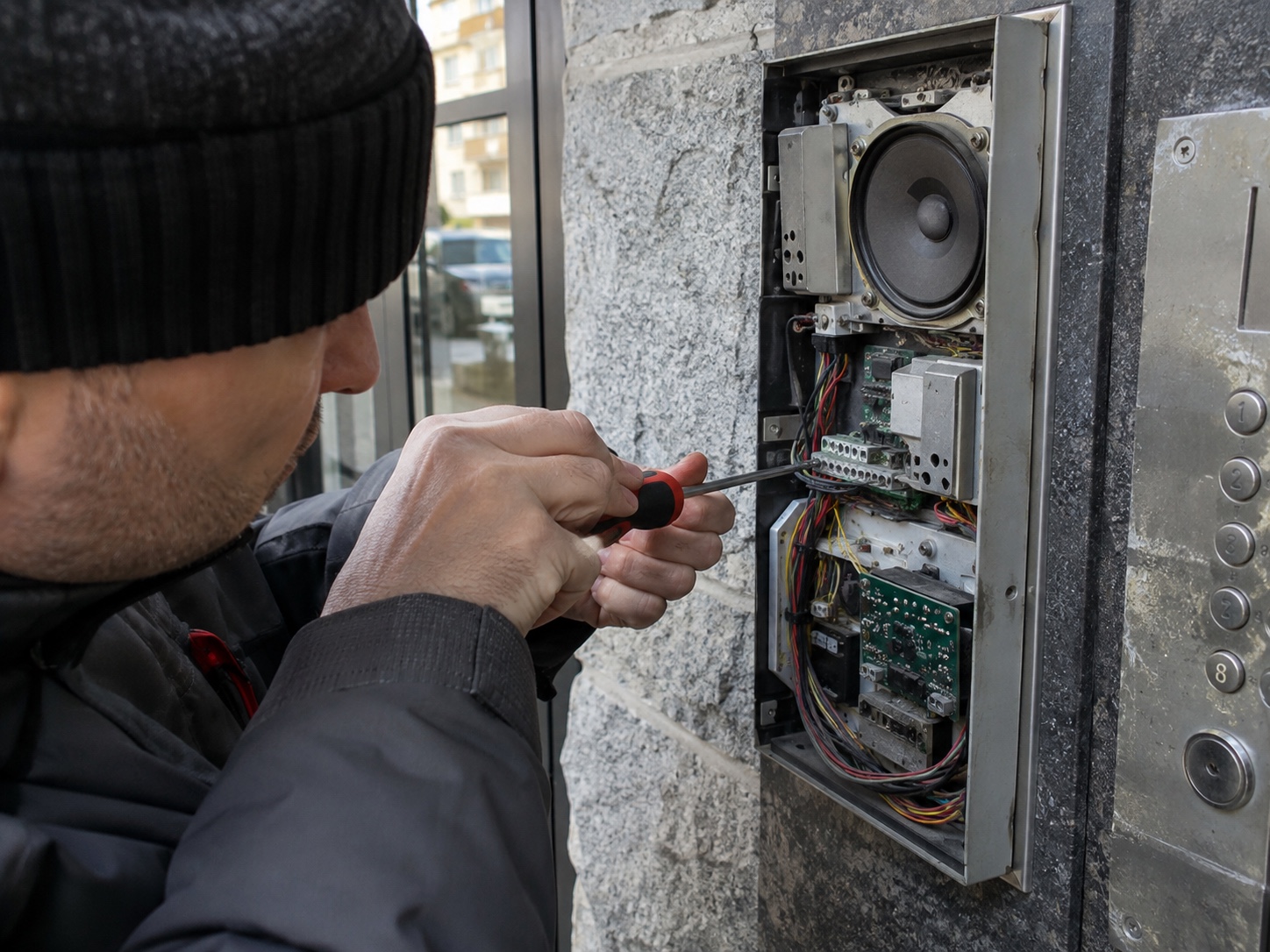
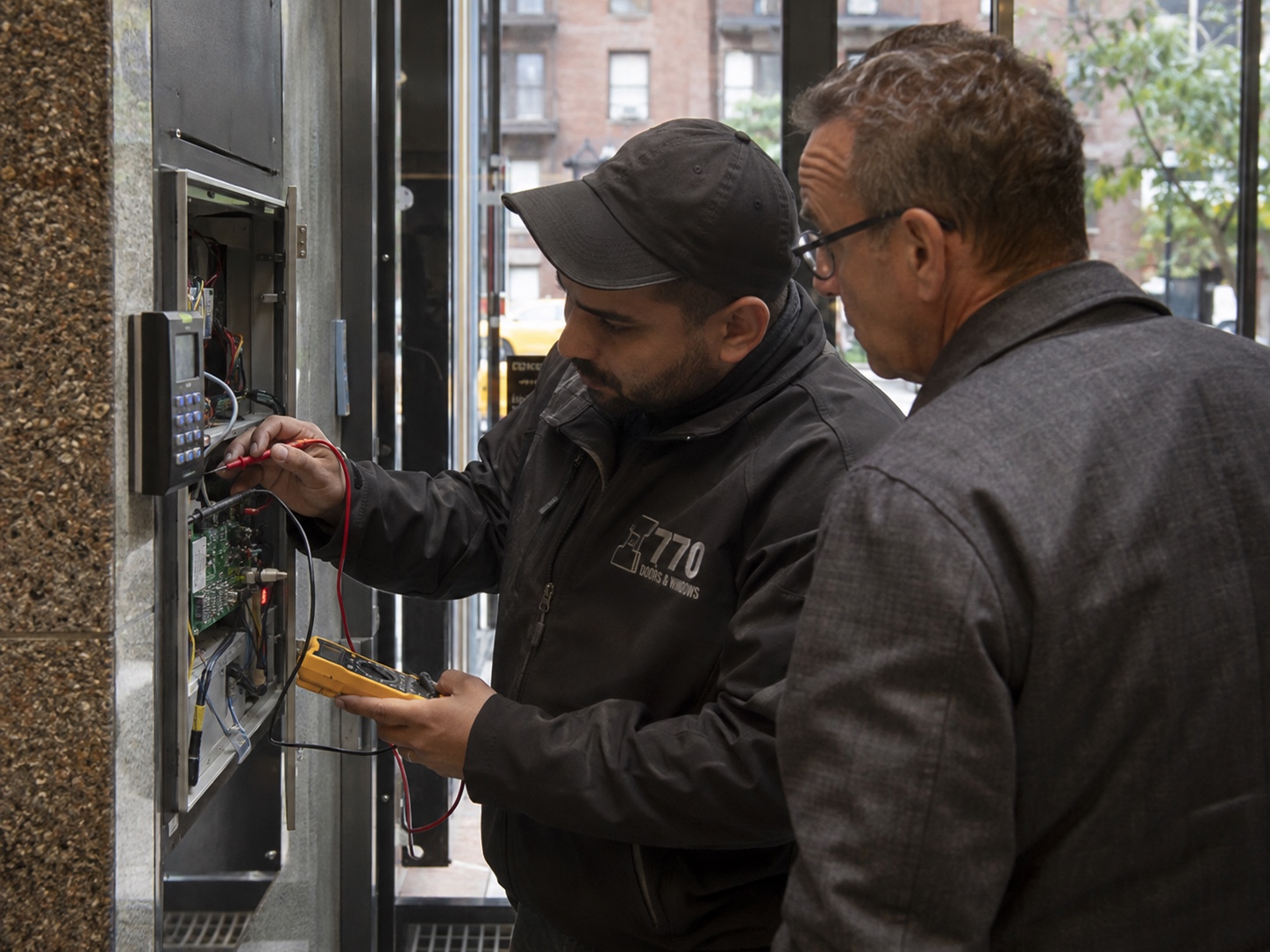
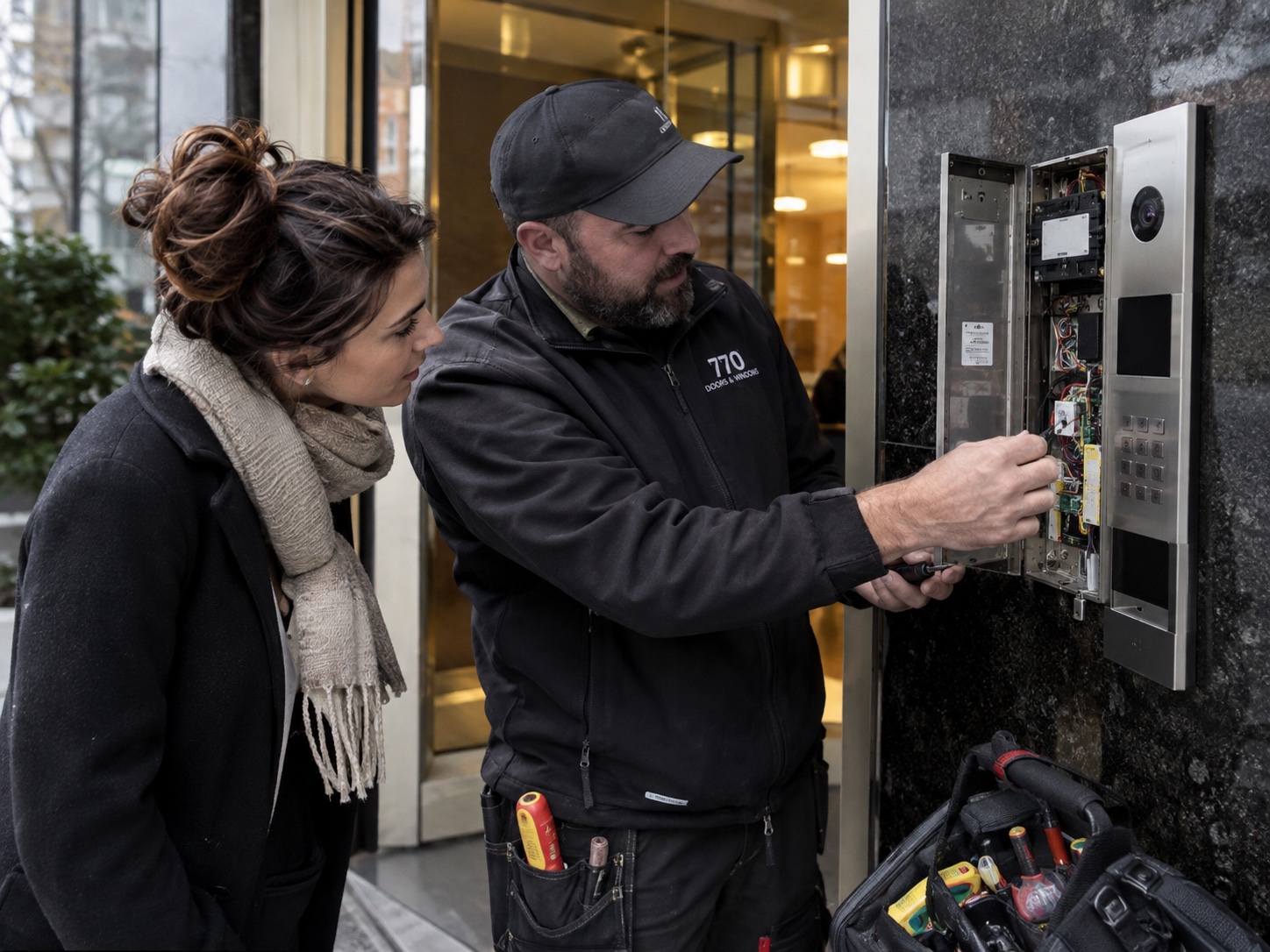
A professional assessment should begin with the reported sequence and the exact equipment identification. The technician can review mounting suitability, enclosure condition, cable entries, connection points, and the relevant power and communication paths. Where access requires opening equipment, that work belongs within a controlled service procedure. Ask for photographs of meaningful findings and a plain explanation of how they relate to the symptoms. A corroded connection near the affected audio path is more informative than a general statement that the system is old. Conversely, a clean enclosure should lead the investigation outward rather than ending it prematurely.
Measurements and available diagnostic records are most useful when tied to the failure period. A normal reading on a dry afternoon does not reproduce the conditions that caused the complaint. The technician may need observations during a later weather event or a planned assessment of the suspected building leak. Owners should not improvise a hose test on the intercom. If controlled water testing is appropriate, its method, boundaries, and responsibilities should be agreed by the relevant professionals. The report should separate confirmed defects, plausible contributors, and remaining uncertainty so management can authorize a proportionate next step.
Choose between restoring the installation and replacing equipment
A localized installation defect may justify repairing the mounting or water path while retaining serviceable equipment. That choice is strongest when the affected parts are accessible, the manufacturer supports the configuration, and post-repair tests can meaningfully evaluate operation. Replacement becomes more reasonable when damage is extensive, repeated failures continue despite a verified installation repair, or the existing assembly cannot be restored appropriately. The decision should account for what will remain: replacing the outdoor station while retaining a deteriorated connection behind it may leave the same practical vulnerability. Ask the proposal to identify retained components as clearly as new ones.
Compare alternatives by the uncertainty each removes. One proposal may replace a microphone but leave the source of moisture unresolved; another may correct the mounting condition and evaluate the complete affected assembly. Those are different scopes, even if both are called an intercom repair. Request an explanation of the expected improvement and what would trigger further work. Also ask how directories, call routing, and resident access will be preserved if equipment changes. A replacement should not introduce avoidable administrative disruption simply because its physical installation appears straightforward. Record the final model and mounting arrangement for future service.
A hypothetical case: the wet panel is not the whole problem
Consider a hypothetical small apartment building where residents hear visitors clearly in dry weather but lose that audio after heavy rain. The owner notices a gap along the panel's upper edge and assumes it is the only leak. Before authorizing a cosmetic reseal, management supplies photographs showing runoff from a joint above the entrance. During a qualified inspection, moisture is found in the recess behind the panel, along with a deteriorated connection. The finding makes the upper gap relevant, but it does not establish that replacing the front seal alone will stop water reaching the recess.
In this scenario, the repair plan coordinates the wall-joint investigation with restoration of the intercom mounting and replacement of the damaged connection. The technician records normal conversations after the equipment work, while management keeps the weather observation period open until another comparable rain event. If audio fails again but the enclosure remains dry, the next investigation follows that evidence rather than repeating the same sealing work. This is an illustrative sequence, not a customer job or a promised outcome. Its lesson is that successful diagnosis links the visible symptom, the moisture route, and the condition of the affected component.
Accept the repair through function and weather follow-up
At handover, test a complete visitor interaction at the affected entrance: select the intended destination, answer, speak in both directions, review the picture if fitted, and request authorized entry. Observe the actual door movement and subsequent closing rather than relying solely on an app message or a sound from the lock. Include destinations that previously failed and at least one that previously worked. The installer should confirm that the enclosure is correctly reassembled and explain any unresolved building work. Keep the test date and conditions with the repair record so a dry-weather handover is not mistaken for a weather-exposure test.
After the next suitable rain, repeat ordinary user checks and compare them with the original symptoms. One successful event is encouraging; continued observation is appropriate if the earlier fault was infrequent. Establish who receives new reports and what evidence should accompany them. Future maintenance can include exterior condition checks after nearby construction, canopy changes, or cleaning work, with cleaning performed according to the equipment instructions. Preserve before-and-after photographs and the account of the water path. Those records make later service more efficient and help distinguish a recurrence of the original defect from a genuinely different problem.